


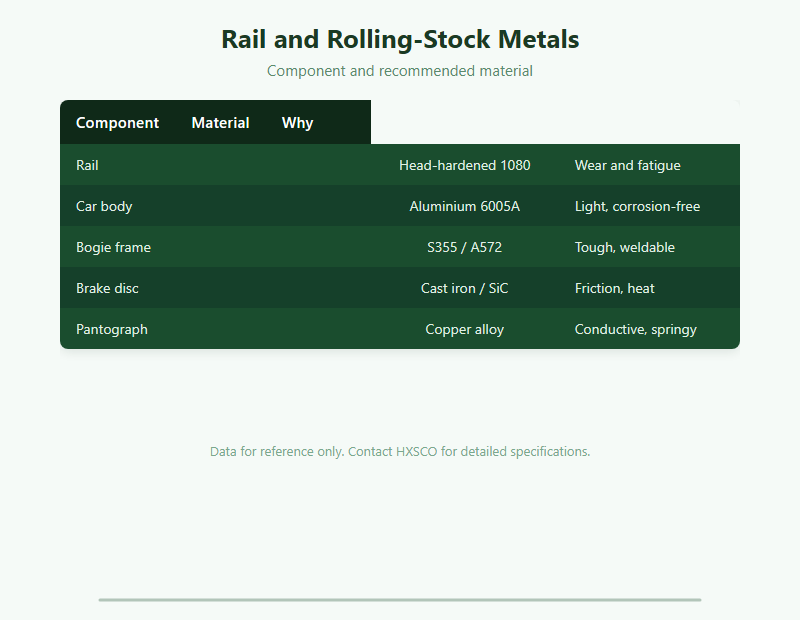
Short answer: Rail and rolling stock mix a few well-chosen metals: head-hardened carbon steel for rail, aluminium for light car bodies, tough structural steel for bogies, and copper alloys for current collection, each picked for weight, fatigue life and corrosion in service.
At a Glance
Lightweighting the Fleet
Aluminium car bodies cut tare weight and energy use while resisting corrosion, so 6005A and 6082 extrusions dominate modern trains; the steel alternative is in our Steel vs Aluminium 그리고 5083 Properties guides, with the busbar angle in Busbar Copper vs Aluminium.
Fatigue and Vibration
Components see millions of load cycles, so fatigue and vibration limits gate the choice more than static strength. Our Fatigue Guide, Vibration Fatigue Guide 그리고 Fracture Toughness Guide explain the criteria.
Corrosion on the Network
Tracks and bodies face weather, de-icing salt and stray current, so galvanised and stainless details earn their keep; see 304 vs 430, Galvanized Grades 그리고 CUI Guide.
Conductive Parts
Pantographs and bond straps need springy, conductive copper alloys, while wiring balances weight and conductivity; our Copper vs Aluminium Wire, Phosphor Bronze Guide 그리고 Conductivity Guide cover the options.
Sourcing for Transport Programs
Transit buyers run long, scheduled programs with strict QA and traceability; our How to Choose a Metal Supplier 그리고 Incoterms Guide frame the commercial terms.
Get a Quote
Tell HXSCO your requirements and we will respond with a competitive quote and lead time.
자주 묻는 질문
Head-hardened pearlitic carbon steel such as 1080 for wear and fatigue life.
Light weight, corrosion resistance and good fatigue for repeated cycles.
Tough, weldable structural grades like S355 or A572.
Copper alloys in the pantograph for conductivity and springiness.
We supply aluminium, steel and copper alloys with mill certificate; send the spec.
Source Transport Metal from HXSCO
HXSCO supplies aluminium, steel and copper alloys for rail and rolling stock. Send your program specification for a quote.