


Short answer: Dezincification is the selective leaching of zinc from brass and some bronzes in certain waters, leaving a porous, weak copper-rich mass; it is prevented by using dezincification-resistant (DZR / arsenical) alloys, controlling chlorides and stray currents, and choosing the right grade for the service.
At a Glance
What Dezincification Is
Dezincification removes zinc from the alloy, leaving a spongy copper-coloured residue that looks intact but has lost strength. It strikes Brass Supplier and certain Bronze Supplier parts in aggressive or stagnant water — a different failure to general loss covered in Brass Vs Copper Comparison and the alloy basis in Brass Grades Guide 그리고 Copper Alloys Guide.
Causes & Mechanism
Warm, acidic or chloride-rich, low-flow water and stray currents drive the attack; it is a form of Galvanic Corrosion Guide at the micro-scale and is worse where Crevice Corrosion Stainless Steel 또는 Seawater Corrosion Guide conditions exist. The nobility gap is visible in the Galvanic Series Guide; baseline defence is How To Prevent Metal Rust.
Prevention & Material Choice
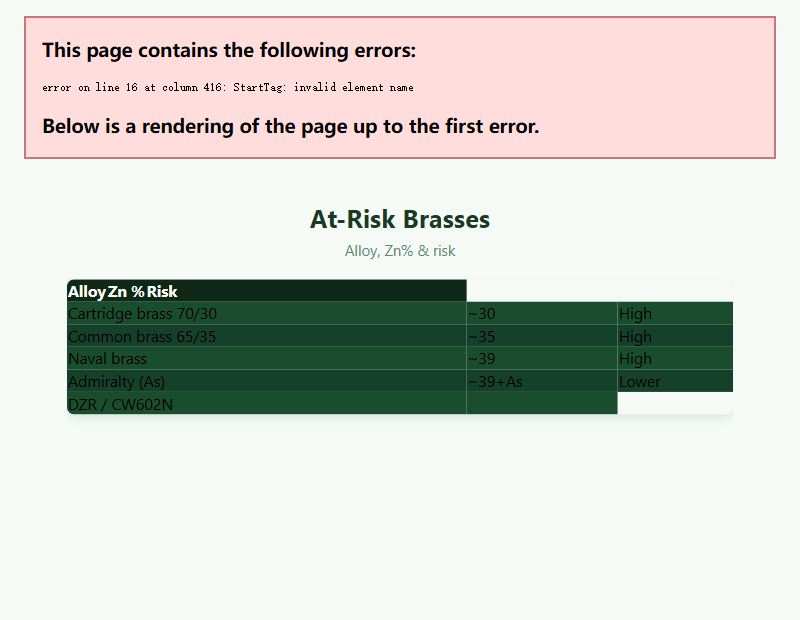
Specify DZR (dezincification-resistant, <2% Zn with arsenic) or arsenical admiralty brass, or move to 스테인리스 스틸 등급 설명 / Duplex Stainless Supplier where the medium is severe. Add Cathodic Protection Guide 그리고 Metal Corrosion Inhibitor Guide, keep flow moving, and certificate chemistry per Mill Test Certificate Guide.
Get a Quote
Tell HXSCO your requirements and we will respond with a competitive quote and lead time.
자주 묻는 질문
Selective leaching of zinc from brass in certain waters, leaving a weak, porous copper-rich structure that retains its shape but loses strength.
High-zinc alloys such as 70/30 cartridge brass, 65/35 common brass and naval brass in warm, stagnant or chloride-rich water.
Use DZR or arsenical (admiralty) brass, or switch to stainless/duplex; maintain flow, add inhibitors and cathodic protection, and verify alloy chemistry.
Dezincification-resistant brass with very low zinc and a small arsenic addition that blocks the leach mechanism — specified for potable and marine service.
No — stainless has no zinc to leach; it faces pitting/crevice attack instead, so it is often the upgrade where brass dezincifies.
Source Dezincification-Resistant Metal from HXSCO
HXSCO supplies DZR brass, stainless and duplex alloys with chemistry certificates for potable and marine service. Send your medium, temperature and quantity for a quote.