


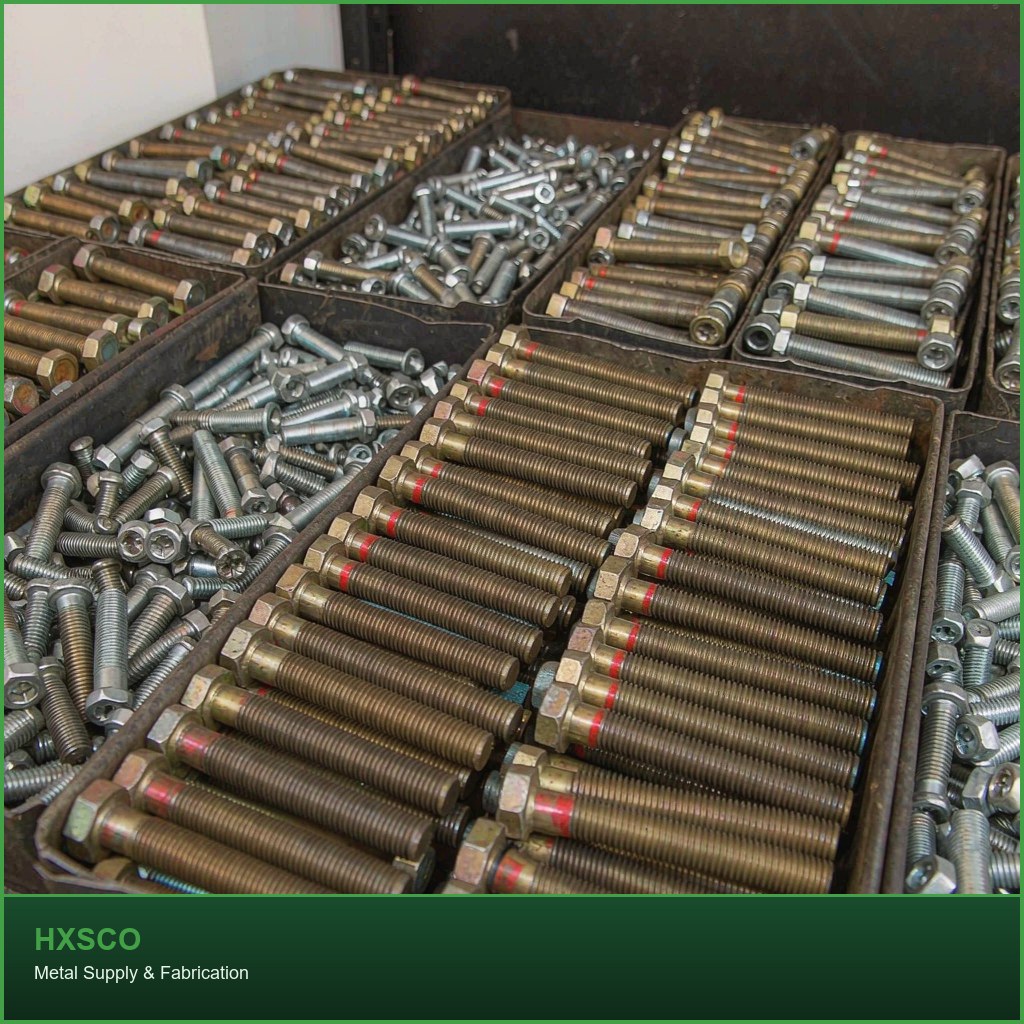
Short answer: Thread rolling cold-forms threads by pressing a hardened die into a rotating or fed blank so the material flows plastically into the thread profile, keeping the grain continuous along the root for higher fatigue strength and no swarf. It is the standard method for bolts, screws, studs and fasteners in steel and stainless, delivering faster cycle times and a better surface than cutting or grinding threads.
At a Glance
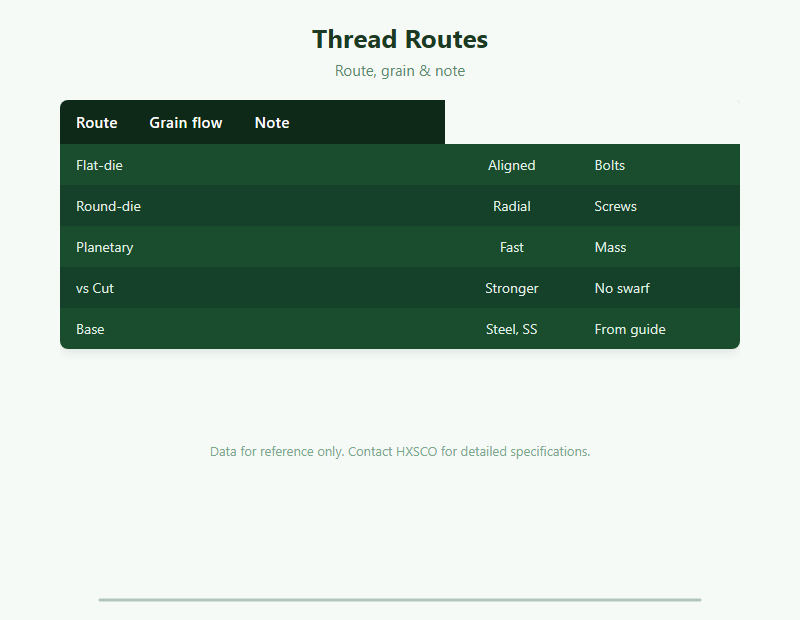
Rolling vs Cutting
Compare with Fasteners Supplier; assess grain via Metal Machinability Guide dan Metal Hardness Testing Methods; relate to Penjelasan Nilai Baja Tahan Karat dan Metal Coining Guide.
Kualitas
Finish checked per Surface Roughness Ra Guide, dimensions per Metal Tolerances Fits Guide. Certified by Mill Test Certificate Guide.
Supply & QA
Protect via How To Prevent Metal Rust. HXSCO supplies bar and wire ready to roll.
Get a Quote
Tell HXSCO your requirements and we will respond with a competitive quote and lead time.
Pertanyaan yang Sering Diajukan
Cold-forming threads by plastic flow against a die, no cutting.
Grain follows the root; no notch from the cutting tool.
Flat-die, round-die and planetary for high volume.
Steel, stainless and some non-ferrous bar and wire.
HXSCO supplies bar and wire suited to thread rolling.
Source Thread-Rolling Stock from HXSCO
HXSCO supplies steel and stainless bar and wire suited to thread rolling and fastener making. Send your grade and size for a quote.