


Short answer: Dye penetrant testing coats a clean part with coloured or fluorescent dye, lets it seep into surface-breaking cracks, removes the excess, then draws the trapped dye to the surface with a developer so defects show under visible or ultraviolet light — a low-cost, all-metal surface NDT method.
At a Glance
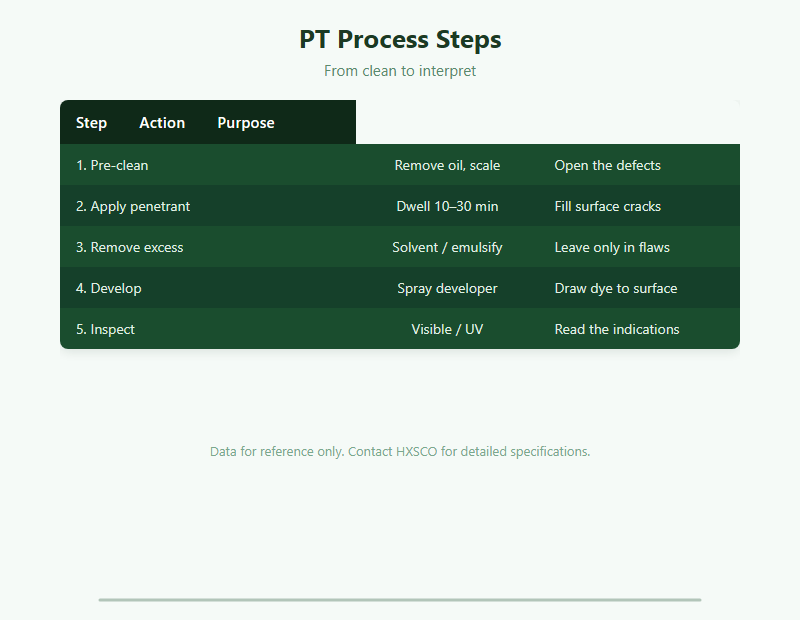
Why PT Is Universal
Unlike magnetic methods, PT works on any metal — aluminium, stainless, nickel, titanium — because it only needs a surface-breaking flaw. It sits alongside Ultrasonic Testing dan Radiographic Testing in an NDT plan. Surface condition is prepared per our Metal Surface Treatment Guide.
Sensitivity Levels
Methods range from solvent-removable visible dye (general) to post-emulsifiable fluorescent (high sensitivity for fine cracks). Cleanliness and roughness affect results — see Surface Roughness Ra Guide; flaw limits reference our Mill Test Certificate Guide.
Where PT Is Used
Castings, forgings, welds and machined parts are screened for surface cracks before service. It is common on our Steel Pipe dan Pipe Fittings where only the surface need be checked.
Limits to Know
PT finds only surface-breaking defects and needs a clean, dry, accessible surface; it cannot see subsurface flaws — use UT or RT for those. Rough or porous surfaces give false indications, so finish control per Tolerances Fits Guide matters.
Get a Quote
Tell HXSCO your requirements and we will respond with a competitive quote and lead time.
Pertanyaan yang Sering Diajukan
Yes — any metal with surface-breaking defects.
Visible for general use; fluorescent for high sensitivity.
Subsurface flaws — use UT or RT for those.
Typically 10–30 minutes for the penetrant.
Dirt seals defects and blocks the dye.
Supply Surface-Clean Metal from HXSCO
HXSCO supplies cast, forged and welded parts with PT surface inspection and mill certificates. Send your acceptance level for a quote.