


Short answer: Brazing and soldering use a lower-temperature filler to join metals without melting the base, from tin-based solder for electronics to silver and copper-phosphorus alloys for plumbing and steel, with consumables in our Copper Supplier and the related process in our Metal Welding Guide.
At a Glance
Brazing vs Soldering
Both use capillary filler below the base melting point; soldering is below 450 C for electronics and plumbing, brazing is hotter for stronger joints, with the wider joining view in our Metal Welding Guide.
Common Filler Metals
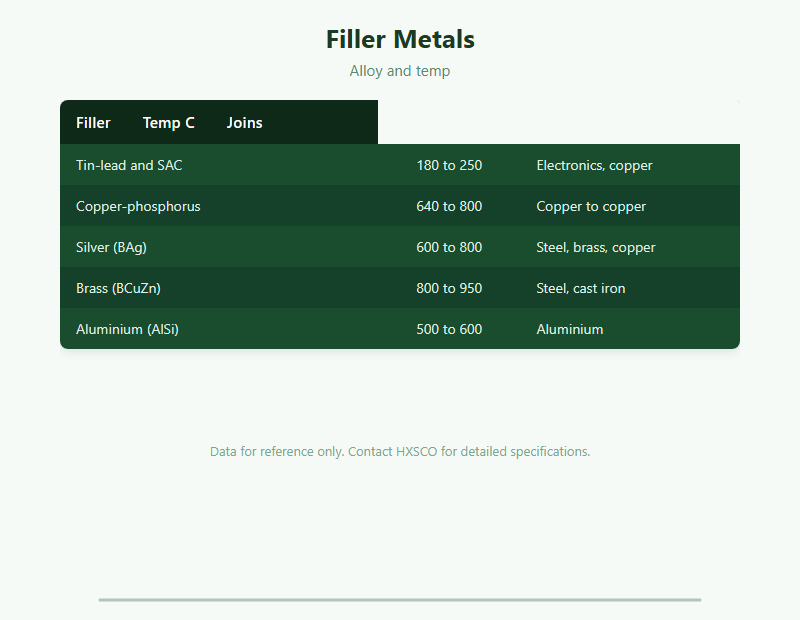
Copper-phosphorus and silver alloys join copper and steel, while tin-based SAC solders serve electronics, with copper base in our Copper Supplier page.
Torch, Furnace and Induction
Manual torch brazing suits repair, furnace and induction give clean, repeatable production joints on brass and steel assemblies.
Quality and Certification
Confirm joint integrity and alloy with our Quality Inspection Guide and lot documents per our Mill Test Certificate Guide.
Get a Quote
Tell HXSCO your requirements and we will respond with a competitive quote and lead time.
Pertanyaan yang Sering Diajukan
Solder below 450 C, braze above for strength.
Copper-phosphorus or silver alloy.
Aluminium-silicon (AlSi) filler.
Often strong enough, with less distortion.
Yes – MTC with alloy analysis.
Get Brazing Alloy Quote
HXSCO supplies brazing and soldering filler metals including silver, copper-phosphorus and SAC with MTC. Send alloy and quantity for a quote.