


Short answer: Fracture toughness (K_IC) is the critical stress-intensity factor at which a crack grows unstably — it lets engineers size flawed components safely, trading off strength, temperature and section thickness instead of assuming a perfect part.
At a Glance
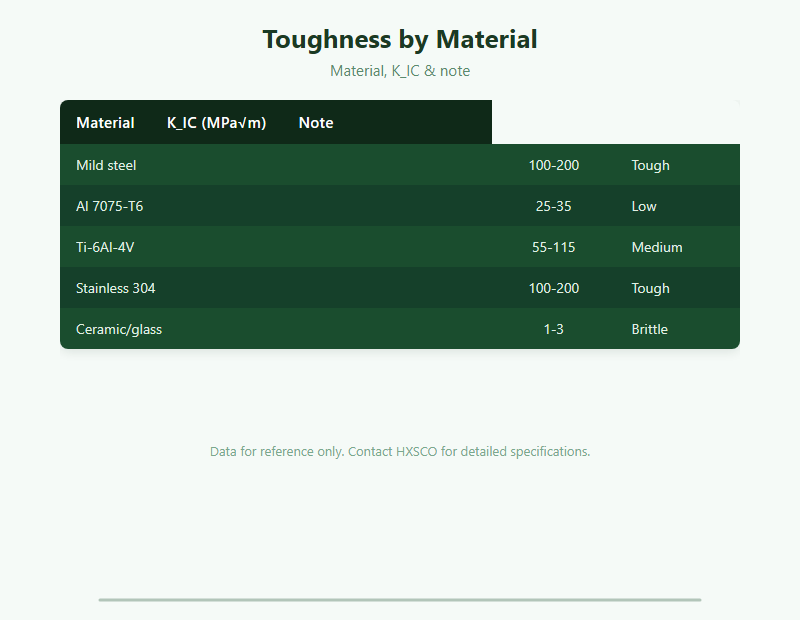
Why K_IC Matters
Real parts have flaws; K_IC caps the stress a crack can tolerate before fast fracture. It sits beside Metal Fatigue Endurance Limit и Yield Strength Vs Tensile Strength, and is validated against Metal Brittle Fracture Guide и Stress Concentration Guide.
Reading the Number
Higher K_IC means more tolerance of defects; cold temperature and thick sections drop it. View fracture surfaces under Metal Metallography Guide and find cracks with Metal Ndt Guide.
QA & Supply
Document properties per Mill Test Certificate Guide, protect via How To Prevent Metal Rust, and select grades with HXSCO for the service temperature and thickness.
Get a Quote
Tell HXSCO your requirements and we will respond with a competitive quote and lead time.
Часто задаваемые вопросы
The resistance of a material with a crack to unstable fast fracture, given as K_IC.
Yes for flaw tolerance — thicker, colder or higher-strength parts need more of it.
Many steels lose toughness and shift to brittle fracture as temperature drops.
By loading a pre-cracked specimen and recording the stress intensity at fracture.
HXSCO supplies grades selected for the required toughness at your service temperature.
Source Tough-Grade Metal from HXSCO
HXSCO supplies metal grades selected for the fracture toughness your service temperature and thickness demand. Send your spec and quantity for a quote.