



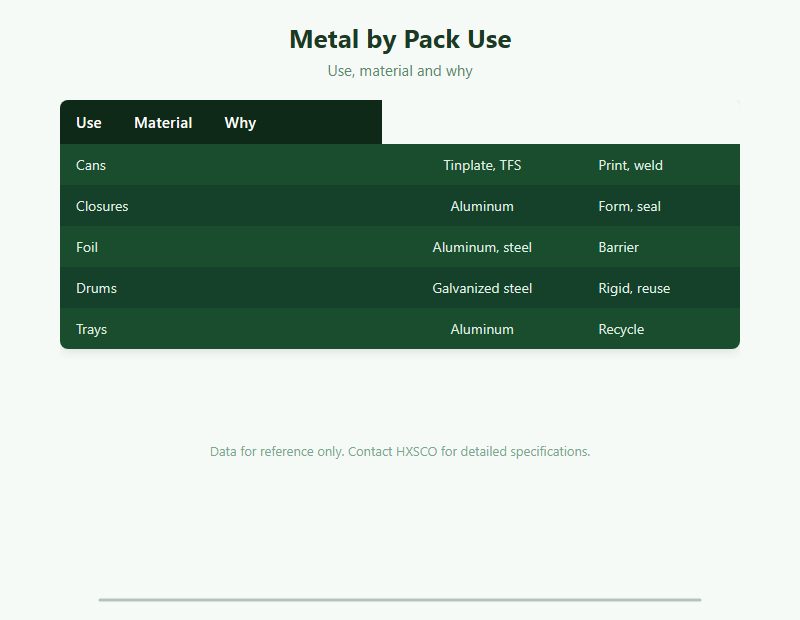
Short answer: Packaging uses tinplate and TFS steel for weldable printed cans, aluminum for closures, trays and formable stock and foil for barrier wraps, with lacquer and coating chosen for food safety and recyclability deciding the metal.
At a Glance
Tinplate and TFS
Tinplate and tin-free steel give a printable, solderable or weldable body for cans; the base choice is in our Steel vs Aluminum Guide, the coated option in our Coated Steel Supplier and the rust view in our Galvanized vs Stainless Guide.
Aluminum and Foil
Aluminum is formed into closures and trays and rolled to thin foil for barrier wraps; the stock is in our Aluminum Supplier, finish in our Anodized Aluminum Guide and profiles in our Extrusion Profiles Guide.
Coating and Lacquer
Internal lacquer stops interaction with food and the print holds brand color; the finish plan is in our Finishing Coating Guide, surface prep in our Surface Treatment Guide and protection in our Corrosion Protection Guide.
Food Safety and Sourcing
Food-contact metal is supplied with traceable certificate and clean packing; the checks are in our Quality Inspection Guide, certificate in our Mill Test Certificate Guide and packing in our Export Packing Guide.
Get a Quote
Tell HXSCO your requirements and we will respond with a competitive quote and lead time.
자주 묻는 질문
Tinplate is the printed, weldable body stock for food and beverage cans.
Tinplate welds and prints well; aluminum is lighter and easily recycled for trays and closures.
Yes – lacquered or plain foil is a standard barrier wrap for food.
Food-grade lacquer selected by product acidity and fill process.
Yes – tinplate, TFS and aluminum can stock with certificate and coil packing.
Source Packaging Metal from HXSCO
HXSCO supplies tinplate, TFS and aluminum can stock and foil with food-grade coating and certificate. Send your gauge and use for a quote.