


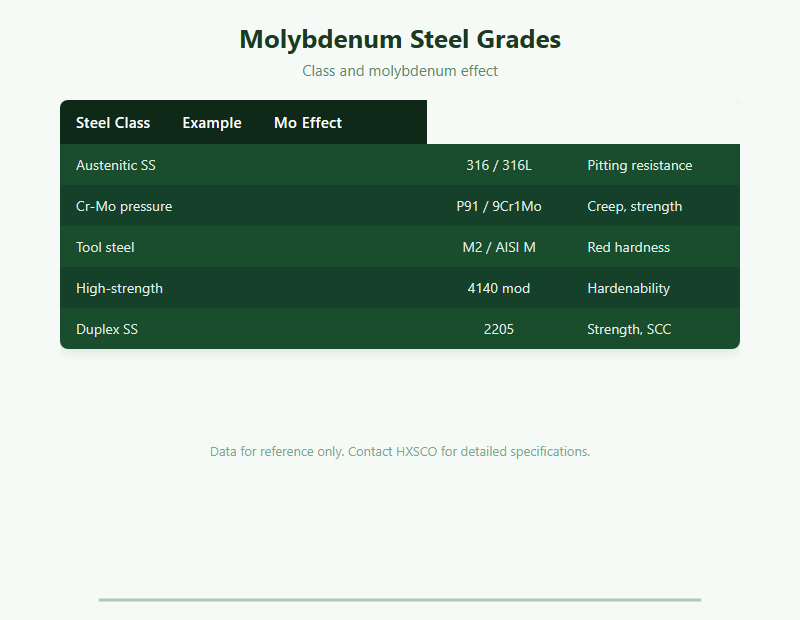
Short answer: Molybdenum in steel raises strength at temperature, improves hardenability and boosts corrosion resistance, most visibly in 316 stainless where it fights pitting, in P91 creep-resistant pressure pipe, and in M2 tool steel where it sustains hardness when hot; buyers should match molybdenum-containing grades to high-temperature, corrosive or high-stress service with our alloy, stainless and tool-steel knowledge.
At a Glance
What Molybdenum Does in Steel
It raises hot strength and hardenability, with the alloy basis in our Alloy Steel Supplier and property basis in our Metal Strength Comparison; corrosion context is in our Corrosion Resistance Guide.
Stainless and Duplex
316 and 2205 use molybdenum for pitting and stress-corrosion resistance, with grades in our Stainless Steel Supplier and the cross-reference in our Steel Grade Equivalent Chart.
Pressure and Tool Steel
P91 and M2 use molybdenum for creep and red hardness, with treatment in our Heat Treatment Guide and tool basis in our Tool Steel Supplier; fatigue context is in our Fatigue Endurance Limit.
Buying Molybdenum Steels
Match grade to service and confirm certificate; certification is in our Mill Test Certificate Guide and export packing in our Export Packing Guide; pair with our Molybdenum Supplier for the raw metal.
Get a Quote
Tell HXSCO your requirements and we will respond with a competitive quote and lead time.
자주 묻는 질문
It greatly improves pitting corrosion resistance.
Keeps hardness at high temperature (red hardness).
P91 and other Cr-Mo pressure steels.
Yes – it slows transformation for deeper hardening.
Request a mill test certificate with chemistry.
Source Molybdenum Steels
HXSCO supplies molybdenum-containing stainless, pressure and tool steels. Send grade and quantity for a competitive quote.