


Short answer: Fracture toughness (K_IC) is the critical stress-intensity factor at which a crack grows unstably — it lets engineers size flawed components safely, trading off strength, temperature and section thickness instead of assuming a perfect part.
At a Glance
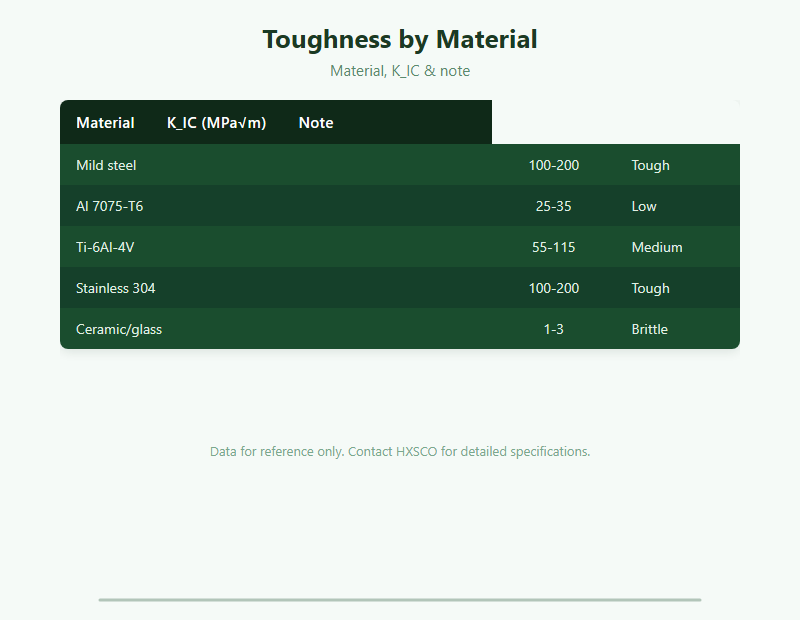
Why K_IC Matters
Real parts have flaws; K_IC caps the stress a crack can tolerate before fast fracture. It sits beside Metal Fatigue Endurance Limit 그리고 Yield Strength Vs Tensile Strength, and is validated against Metal Brittle Fracture Guide 그리고 Stress Concentration Guide.
Reading the Number
Higher K_IC means more tolerance of defects; cold temperature and thick sections drop it. View fracture surfaces under Metal Metallography Guide and find cracks with Metal Ndt Guide.
QA & Supply
Document properties per Mill Test Certificate Guide, protect via How To Prevent Metal Rust, and select grades with HXSCO for the service temperature and thickness.
Get a Quote
Tell HXSCO your requirements and we will respond with a competitive quote and lead time.
자주 묻는 질문
The resistance of a material with a crack to unstable fast fracture, given as K_IC.
Yes for flaw tolerance — thicker, colder or higher-strength parts need more of it.
Many steels lose toughness and shift to brittle fracture as temperature drops.
By loading a pre-cracked specimen and recording the stress intensity at fracture.
HXSCO supplies grades selected for the required toughness at your service temperature.
Source Tough-Grade Metal from HXSCO
HXSCO supplies metal grades selected for the fracture toughness your service temperature and thickness demand. Send your spec and quantity for a quote.